Open post

3. Three Days in One Neighborhood: The Travel Experiment That Changed How I Explore Cities

Travel photographer captures urban life vibrant street scenes local culture outdoor adventure eye-level perspective storytelling moments

On my first visit to a large city, I made the classic mistake: I tried to see everything.

Museums in the morning, landmarks at noon, viewpoints at sunset, nightlife after dark. By the end of each day I had dozens of photos and a strangely thin memory of the city itself. I could list attractions, but I couldn’t describe what the place felt like.

So on a later trip, I ran an experiment. For three days, I stayed almost entirely within a single neighborhood.

No cross-city scavenger hunt. No attraction marathon. Just one district, explored repeatedly.

Day 1: Tourist Vision

The first day looked familiar. I photographed the market, the main square, the colorful facades, and the famous bakery everyone mentioned online. I noticed architecture and prices. I navigated efficiently. I was, in other words, seeing the neighborhood as a visitor.

Day 2: Pattern Vision

Returning to the same streets changed the experience immediately.

I noticed which café filled up at 8 a.m. and emptied by 10. I saw delivery trucks arrive before the market opened. I realized the quiet side street became noisy after school let out. I started recognizing faces: the newspaper vendor, the barista, the elderly man who walked the same route every evening.

The neighborhood stopped being scenery and started behaving like a living system.

Day 3: Belonging (Temporary, but Real)

By the third day, something subtle happened: I no longer needed my phone every few minutes. I knew where to turn. I knew which alley led to the river and which led to the square. The bakery owner nodded in recognition. I had not become a local, of course, but I had crossed a threshold from orientation to familiarity.

That feeling—temporary belonging—is one of the most satisfying experiences travel can offer.

Why Repetition Matters

We often assume novelty is the engine of travel. Novelty is important, but repetition is what creates depth.

Consider how you learn your own hometown. Not through a single comprehensive tour, but through repeated exposure: the route to work, the corner store, the park at different seasons, the restaurant you revisit. A neighborhood becomes meaningful when it acquires layers of memory.

Most trips deny themselves that layering because we move on too quickly.

The Hidden Advantage: Less Decision Fatigue

Constant sightseeing creates constant logistics:

  • How do I get there?
  • Is it open?
  • Do I need tickets?
  • What’s next?
  • Am I falling behind schedule?

Staying within one area dramatically reduces these decisions. Mental energy shifts from navigation to observation. Instead of optimizing movement, you start noticing details.

I spent one afternoon sitting in the same square for an hour. A tourist version of me would have considered that wasted time. The neighborhood version of me watched workers on lunch break, children playing, a violinist setting up, and storm clouds changing the light across the buildings. It became one of the most vivid hours of the trip.

How to Try This Without Feeling Like You’re Missing Out

A practical compromise is the 60/40 rule:

TimeUse
60%Stay within your chosen neighborhood
40%Take targeted trips to one or two major attractions elsewhere

This preserves the highlights while still giving a district enough time to become familiar.

Choose a neighborhood with everyday life: cafés, groceries, transit stops, parks, and housing—not just attractions. The goal is to encounter routine, because routine is where a city reveals itself.

The Question I Ask Now

When planning a trip, I still look at famous sights. But I also ask a different question: Where could I imagine spending an ordinary Tuesday? That question leads me toward neighborhoods instead of checklists.

Sometimes the answer is a canal district, sometimes a market quarter, sometimes a residential area near a park. The specific place matters less than the opportunity to return to the same streets more than once.

Three days in one neighborhood won’t maximize the number of landmarks you can claim. It may, however, maximize the chance that years later you can still remember the smell of the bakery at 7 a.m., the sound of the tram turning the corner, and the exact bench where the city finally stopped feeling unfamiliar.

For me, that has become a more meaningful measure of travel than the length of a checklist.

Open post

2. The Night Train Across Europe: Why Slow Travel Creates Better Stories

Basel, Copenhagen and Malmö: New Switzerland–Scandinavia Sleeper Set to Reshape Tourism Flows - Travel And Tour World

Air travel wins on speed. A night train wins on narrative.

I learned this somewhere between Vienna and Venice, in a sleeper compartment that gently rattled through the dark. The trip covered only a few hundred kilometers, yet it felt larger than flights that had crossed continents. Why? Because the journey itself became part of the experience instead of a gap between experiences.
A Moving Hotel, a Moving Conversation

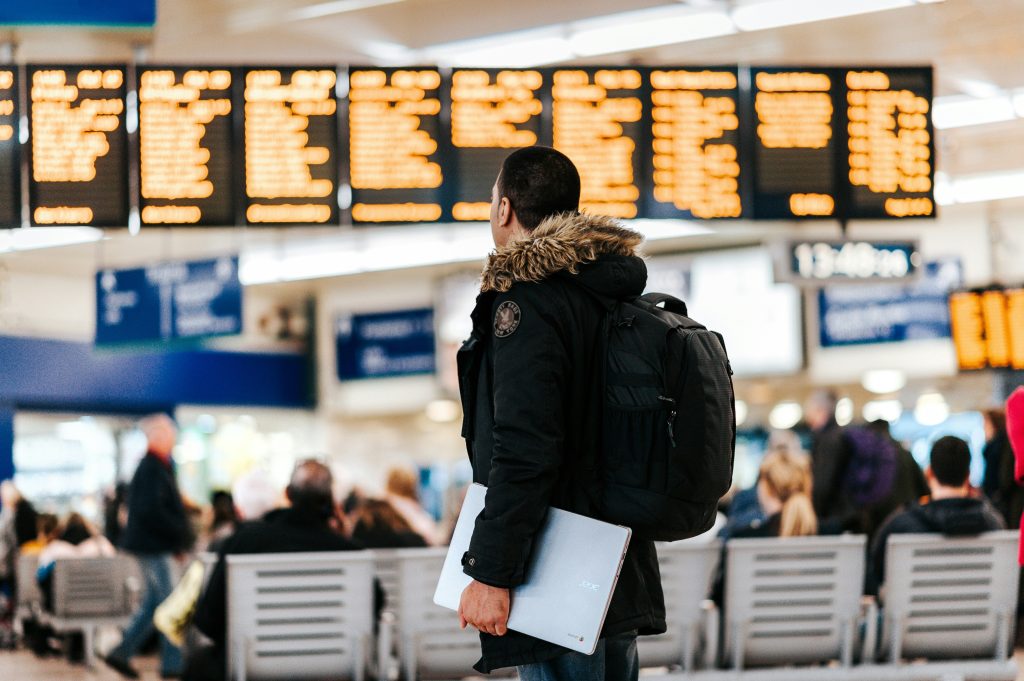
Night trains create a peculiar social atmosphere. People aren’t rushing for a boarding zone or staring at arrival screens. They’re settling in. Shoes come off. Backpacks become pillows. Strangers exchange the practical diplomacy of shared space:

“Is this seat taken?”

“Would you like the window closed?”

“What stop are you getting off at?”

By midnight, our compartment had transformed from six separate itineraries into a temporary community. A student returning home, a couple celebrating an anniversary, a photographer chasing winter light, and me. We traded recommendations with the intensity of people who know the conversation has a deadline.

That’s one reason slow travel often feels richer: time creates opportunities for interaction. On a two-hour flight, you might exchange a few words. On a twelve-hour train, you may exchange stories.

The Geography Becomes Continuous

Flying turns geography into a jump cut. One moment you’re in one country; a few hours later you’re in another, with little sense of the terrain between them.

On a train, landscapes transition gradually. Industrial outskirts become fields, fields become hills, hills become villages, and villages become city lights. You feel the distance. You understand why regions differ from one another because you’ve watched the change happen in real time.

That continuity is surprisingly educational. It turns the map from an abstract diagram into a lived sequence.

The Luxury of Looking Out the Window

Modern travel encourages constant input: podcasts, streaming, messaging, scrolling. A long train ride offers permission to do something unfashionable—look out the window for twenty minutes and think about nothing in particular.

I noticed things I would have ignored elsewhere:

  • How church towers appear before towns do.
  • How rivers organize settlements.
  • How different countries use color on rooftops.
  • How dawn changes the same landscape every few minutes.

None of this was on a checklist. Yet these observations are now inseparable from my memory of the trip.

What Slow Travel Actually Means

Slow travel is often misunderstood as “traveling slowly” in the literal sense. It’s better defined as allowing enough time for a place to affect you.

You can practice slow travel even on a short trip:

  1. Stay in one neighborhood longer instead of crossing the city repeatedly.
  2. Return to the same café twice.
  3. Walk a route at different times of day.
  4. Use local transportation for at least part of the trip.
  5. Leave one half-day unscheduled.

The goal isn’t to see fewer things out of principle. It’s to experience at least a few things deeply enough that they stop feeling interchangeable.

The Dawn Arrival

Near sunrise, the compartment grew quiet. Curtains opened. The photographer pressed his face to the glass. Mist hung over the fields. Then the tracks curved, and the first canals appeared. Venice wasn’t a sudden arrival; it emerged gradually from the landscape we had been crossing all night.

When we stepped onto the platform, the city felt earned rather than delivered.

That is the secret gift of slow travel. It doesn’t just move you through space. It lets anticipation build, lets conversations happen, lets observations accumulate, and lets the destination become the final chapter of a story that started long before you arrived.

Open post

1. The Lost Morning in Kyoto: A Travel Story About Getting Deliberately Off Schedule

Japanese-style street in the morning, in Kyoto, Japan

Most travel advice tells you to optimize. Wake up early. Hit the famous sights before the crowds. Reserve the popular restaurant weeks in advance. Plan every hour so you don’t “waste” your trip.

Kyoto taught me the opposite lesson.

I arrived with a detailed itinerary: sunrise at Fushimi Inari, matcha at a famous tea house, a museum, a market, dinner in Gion. My notebook looked impressive. My day lasted exactly thirty-five minutes before it unraveled.

A small side street pulled me away from the station. Then another. I followed the sound of a broom sweeping stone. A woman watered potted plants outside a wooden townhouse. A cat stretched in a patch of sunlight. Somewhere nearby, someone was cooking rice. The city that existed between the guidebook highlights slowly came into focus.

The Beauty of the Unspectacular

Travelers often chase the grand reveal: the mountain vista, the cathedral, the perfect sunset. But many places are understood through repetition rather than spectacle.

In Kyoto, I spent nearly an hour watching shopkeepers prepare for the day. Curtains were tied back. Bicycle baskets were loaded. Tiny shrines were dusted. Nothing “happened,” yet I left feeling as if I had finally met the city instead of merely photographing it.

The same pattern appears everywhere. In Rome, it’s the sound of espresso cups before offices open. In Lisbon, laundry lines and morning deliveries. In Bangkok, food vendors arranging herbs with the precision of jewelers. The memorable part isn’t always the attraction itself; it’s the life surrounding it.

Why We Remember Detours

Psychologists sometimes note that novelty helps memory formation. What guidebooks rarely mention is that unexpected novelty is often the strongest kind. The planned temple becomes “one of several temples.” The unplanned alley with the paper lantern and the smell of cedar becomes a vivid scene that survives years later.

When travelers tell stories after they return home, they rarely lead with ticket prices and opening hours. They say things like:

“We got lost and found a bakery where nobody spoke English.”

“A local recommended a tiny noodle shop behind the market.”

“The rain forced us into a neighborhood café, and it became our favorite afternoon.”

Those moments feel personal because they weren’t interchangeable. They happened to you, in that place, on that day.

A Practical Way to Leave Room for Serendipity

You don’t need to abandon planning entirely. The trick is to plan anchors, not every minute.

Try this framework:

AnchorExample
MorningOne must-see site
MiddayOne neighborhood or district
EveningOne meal reservation (optional)
Everything elseUnscheduled wandering, cafés, parks, conversations, shops

This creates structure without sealing the day shut. If something interesting appears—a festival, a bookstore, a riverside path—you can follow it without feeling that the entire itinerary has collapsed.

The Small Ritual That Changed My Trips

Since Kyoto, I’ve started every trip with the same rule: for the first two hours, walk without navigation unless safety requires it.

I still carry a map. I still know my hotel address. But I let curiosity decide the first turns. The goal isn’t to get lost dramatically. The goal is to let the destination introduce itself before algorithms and ratings filter the experience.

That single habit has led me to hidden courtyards in Prague, a neighborhood jazz rehearsal in New Orleans, and a family-run pastry shop in Porto that never appeared on my saved list.

The Morning I Almost Missed

By late morning in Kyoto, I eventually reached one of the famous temples. It was beautiful. I took the photos. I admired the architecture. But when friends later asked about the city, I found myself describing the broom on stone, the cat in the sunlight, and the alley that wasn’t on the itinerary.

Travel isn’t only a collection of landmarks. It’s a collection of encounters with the ordinary life of a place. Sometimes the best way to find that life is not to optimize your schedule, but to leave a little empty space in it.

Scroll to top